BUILD SOMETHING ONLINE THAT’S ACTUALLY YOURS
Build an Online Business You Own
Turn what you know, enjoy or do well into a brand, website and audience you can build on for years — then learn practical ways to grow traffic, earn trust and create income from it.
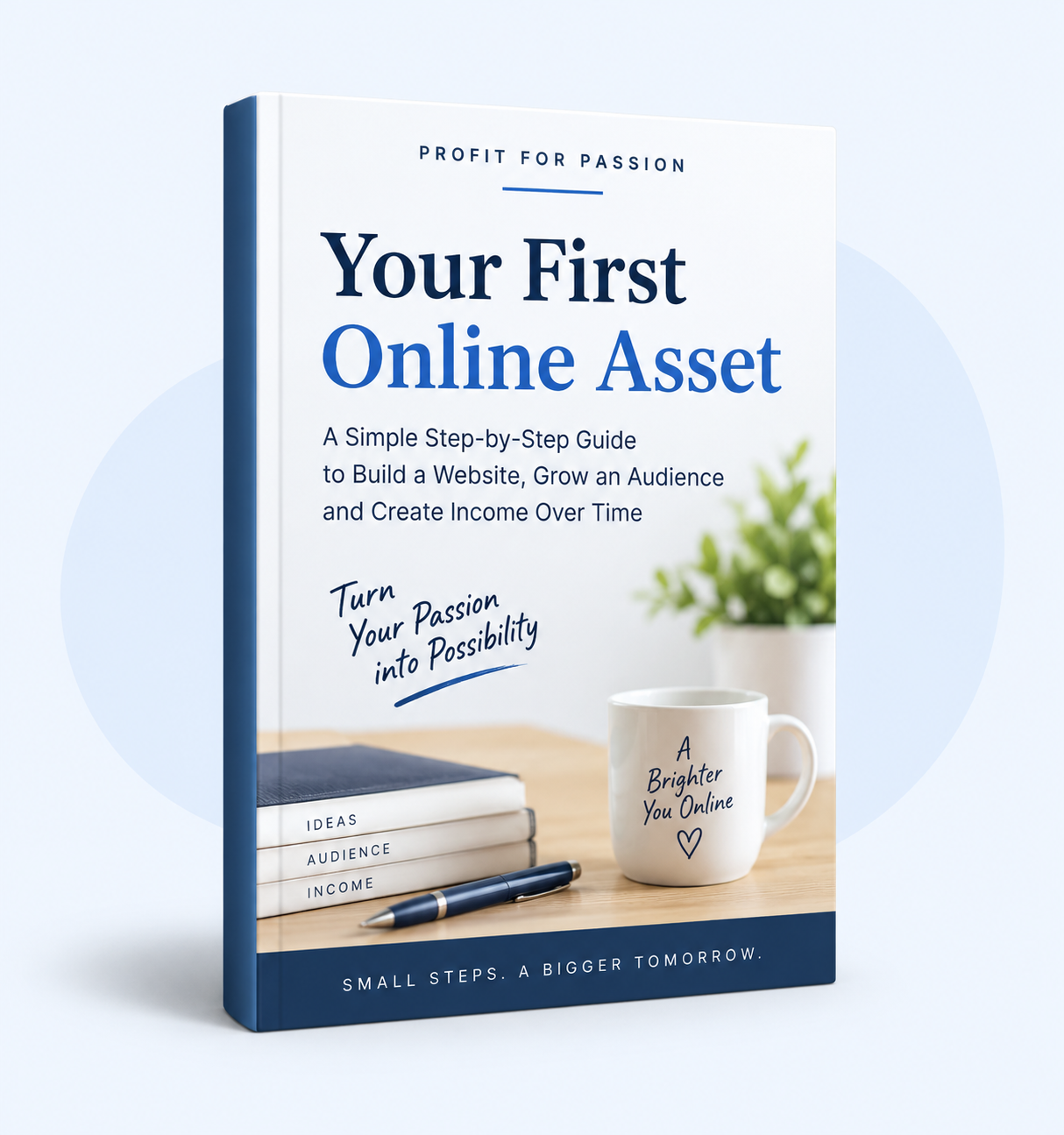
FREE BEGINNER’S GUIDE
Build Your First Online Asset
Get the simple step-by-step roadmap for turning what you know into a website, audience and income stream you can build over time.
Making Money Online Is Better When You’re Building Something
There are plenty of ways to make money online.
You can sell your time. Pick up freelance work. Promote somebody else’s platform. Chase the latest business model making the rounds on YouTube.
Some of those can work perfectly well.
But we are interested in a slightly different question:
What are you building while you earn?
A useful website can become easier to find. Helpful content can continue attracting readers long after you publish it. An email list gives you an audience you can reach again. A trusted brand can make future products, services and recommendations easier to introduce.
Individually, these may look like small pieces.
Together, they can become an online business asset.
That’s the approach you’ll find here: use your interests, knowledge, skills or experience to create something useful online, attract the right people and gradually build sensible ways to monetize it.
No magic button required.
How an Online Business Becomes an Asset
If you’re building an online business from scratch, it’s easy to get buried under domain names, social platforms, funnels, plugins, monetization methods and somebody insisting you urgently need a complicated automation system.
You probably don’t.
Start with the fundamentals.
01
BUILD
Create a website and home base you control.
02
CREATE
Publish useful content worth finding.
03
GROW
Turn visitors into an audience you can reach again.
04
EARN
Add monetization that makes sense for your audience.
05
IMPROVE
Keep making the asset more useful and valuable.
How to Start Building Your Online Asset
Now it’s time to turn the idea into action. The goal is to build in a sensible order: choose what you’re creating and who it’s for, establish a home base you control, publish useful content, build an audience you can reach again, and then add a monetization model that fits.
You don’t need to tackle every step at once. Work through them in sequence, because each one gives the next something solid to build on.
STEP 1
Choose What You’ll Build — and Who It’s For
Start with something you know, enjoy or have useful experience with, then narrow it down to the people you want to help. “Fitness” is broad. “Strength training for busy professionals over 40” gives you a much clearer idea of who you’re creating for and what they might need.
Before building anything substantial, look for evidence that people are already searching for answers, buying products or services, joining communities, or asking questions around the topic. You don’t need a completely original idea. You need a useful angle on a problem or interest that already exists.
The clearer you are about what you’re building and who it serves, the easier the next decisions become — from what content to create to how the asset might eventually make money.
Your next move: Write down one topic you could help people with, the specific audience you’d like to serve, and three problems or questions they regularly have.
STEP 2
Create Your Home Base
Your online asset needs a place to live. That means creating a website you control rather than building the entire business on a social platform or marketplace.
Your website becomes the central hub for your content, email signup, offers and brand. It also gives you something you can improve over time instead of relying entirely on somebody else’s platform, algorithm or rules.
Keep the first version simple. Choose a clear domain name, set up the basic site structure and focus on getting useful content published. A modest website with ten genuinely helpful pages is a better starting asset than a beautifully polished site with nothing useful on it.
STEP 3
Create Useful Content People Actually Want
Your website only becomes an asset when there’s something useful for people to find. Start with content that answers real questions, solves specific problems or helps your audience make better decisions.
Use keyword research to understand what people are searching for, but don’t create content just because a tool found a keyword. Look for topics where you can add useful explanations, examples, experience or a clearer answer than what’s already available.
Build around a small number of closely related topics rather than publishing randomly. Over time, those pieces of content can support one another, strengthen your authority and give visitors more reasons to stay.
STEP 4
Build an Audience You Can Reach Again
Getting visitors is useful. Being able to reach some of those people again is much more valuable.
Give readers a good reason to join your email list — usually something genuinely useful that helps them take the next step. That could be a checklist, roadmap, template, short course or other resource closely related to why they visited your site in the first place.
Over time, your email list gives you a direct connection with people who already know your work. You’re no longer relying entirely on search engines or social platforms to bring everyone back.
STEP 5
Add a Monetization Model That Fits
Once your asset is helping the right people, look for ways to earn that make sense for the audience and the value you’re already creating.
Depending on your topic, that might include affiliate recommendations, services, digital products, courses, memberships, sponsorships or a combination of several models over time.
You don’t need to add everything at once. Start with the monetization method that fits most naturally with what your audience already comes to you for, then expand when there’s a good reason to.